
Roll Forming vs Fabrication: Which Is Better for Solar Mounting Structures?
As solar installations continue to scale across rooftop, industrial, and utility-scale projects, choosing the right manufacturing method for solar mounting structures has become critical. Two commonly used approaches are roll forming and traditional fabrication.
While both methods are used in the steel industry, their performance, efficiency, and suitability for solar mounting systems differ significantly. This blog explains the key differences and helps determine which method is better for modern solar structures.
What Is Roll Forming?
Roll forming is a continuous manufacturing process in which flat steel coils pass through a series of precision rollers to gradually form a desired cross-sectional profile. The metal is shaped incrementally without interrupting the grain structure of the steel.
Roll forming is widely used to manufacture structural channels, purlins, strut channels, and solar mounting components that require uniform dimensions, long lengths, and high strength.
What Is Traditional Fabrication?
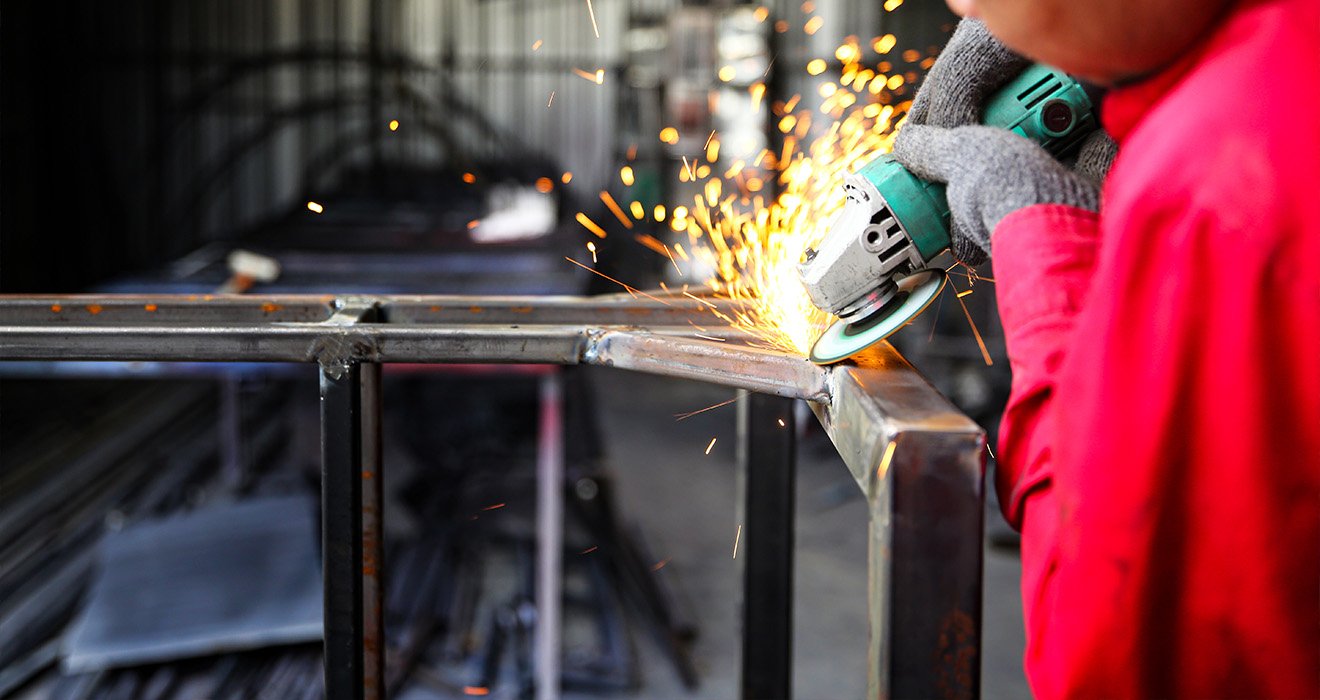
Fabrication typically involves cutting steel plates or sections, followed by bending, drilling, welding, and surface finishing. This process relies more on manual or semi-automated operations and is often used for custom or small-batch structural work.
While fabrication offers flexibility, it can introduce inconsistencies and higher costs when used for large-scale solar mounting systems.
Key Differences Between Roll Forming and Fabrication
1. Structural Strength
Roll-formed sections maintain continuous grain flow, resulting in higher strength-to-weight ratios. Fabricated structures often rely on welded joints, which can introduce weak points and stress concentration.
2. Dimensional Accuracy
Roll forming delivers consistent profiles with tight tolerances across large production volumes. Fabrication accuracy can vary depending on operator skill, welding quality, and handling.
3. Production Speed and Scale
Roll forming is highly efficient for mass production, producing long continuous sections quickly. Fabrication is slower and less efficient for large solar projects with repetitive components.
4. Material Utilization
Roll forming minimizes material wastage by shaping steel directly from coils. Fabrication processes often generate scrap due to cutting and trimming.
5. Installation Efficiency
Roll-formed components are uniform and often supplied with pre-punched holes or slots, making on-site installation faster and more accurate. Fabricated parts may require additional adjustments during installation.
Why Roll Forming Is Better for Solar Mounting Structures
Solar mounting systems demand long-term durability, structural consistency, and cost efficiency. Roll forming meets these requirements by delivering standardized, high-quality components suitable for large-scale deployment.
-
Consistent strength and performance across all components
-
Faster manufacturing and installation timelines
-
Lower overall project cost for EPC contractors
-
Improved corrosion protection with pre-galvanized or HDG finishes
-
Scalability for utility-scale and rooftop solar projects
When Is Fabrication Still Used?
Fabrication may still be suitable for special applications such as one-off custom structures, prototype development, or small-scale projects where standard roll-formed profiles are not required.
However, for repetitive, performance-driven solar mounting structures, fabrication is generally less efficient and more costly than roll forming.
Conclusion
While both roll forming and fabrication have their place in the steel industry, roll forming is clearly the superior choice for solar mounting structures. Its ability to deliver precision, strength, scalability, and cost efficiency makes it the preferred manufacturing method for modern solar infrastructure.
As solar projects continue to grow in size and complexity, roll-formed structures will remain the backbone of reliable and long-lasting solar installations.